Showing posts with label Projects. Show all posts
Showing posts with label Projects. Show all posts
Friday, 1 January 2016

Wednesday, 30 December 2015
Sustainable Living through Permaculture Systems
Warren Brush (Exec. Dir., Quail Springs Permaculture Gardens) guides us through the various interdependent sustainable living & food production systems at Quail Spring Permaculture Gardens & Sustainable Living Facilities (Maricopa, Ca.). Produced for public television by Barrett Productions, Ventura, Ca. More info www.quailsprings.org
Tuesday, 29 December 2015
From Ego-System to Eco-System Economies: Otto Scharmer
Talk by Otto Scharmer, Senior Lecturer at MIT, at Wisdom 2.0 Business 2014
Art of Hosting: Participatory Leadership Practices that Change the Way We Meet
Join us to explore a couple key models and perspectives from the Art of Hosting participative leadership practice. Discover how the Art of Hosting practices can help you work more effectively and enjoyably together -- in meetings and movements like Transition -- to engage teams, organizations, and community stakeholders in meaningful conversations and actionable solutions.
Teresa Posakony works with organizations and communities who are seeking to put to work the ineffable qualities of community to bring high levels of effective engagement, creative design and deep resilience to work. She was a long time member of the Berkana Institute, worked 13 years in high tech doing leadership and organizational development, and now12 years deeply engaged in hosting process in a breadth of non-profit organizations and community driven efforts.
Tenneson Woolf is a facilitator who designs and leads meetings in participative formats. These formats help people be smart together and get people interacting with each other -- learning together, building relationships, and focused on projects. Living systems, self-organization, and emergence inspire his work. He is a steward in the Art of Hosting community of practice and works locally with The Salt Lake Center for Engaging Community. Tenneson's educational background includes a Masters Degree in Organizational Behavior and a Bachelors Degree in Psychology. He lives in both Lindon, Utah and Seattle, Washington
Teresa Posakony works with organizations and communities who are seeking to put to work the ineffable qualities of community to bring high levels of effective engagement, creative design and deep resilience to work. She was a long time member of the Berkana Institute, worked 13 years in high tech doing leadership and organizational development, and now12 years deeply engaged in hosting process in a breadth of non-profit organizations and community driven efforts.
Tenneson Woolf is a facilitator who designs and leads meetings in participative formats. These formats help people be smart together and get people interacting with each other -- learning together, building relationships, and focused on projects. Living systems, self-organization, and emergence inspire his work. He is a steward in the Art of Hosting community of practice and works locally with The Salt Lake Center for Engaging Community. Tenneson's educational background includes a Masters Degree in Organizational Behavior and a Bachelors Degree in Psychology. He lives in both Lindon, Utah and Seattle, Washington
Thursday, 24 December 2015
Understanding the Mondragon Worker Cooperative Corporation
The MONDRAGON Corporation is a corporation and federation of worker cooperatives based in the Euskadi. Founded in the town of Mondragón in 1956, its origin is linked to the activity of a modest technical college and a small workshop producing paraffin heaters.
Currently it is the seventh largest Spanish company in terms of asset turnover and the leading business group in the Basque Country. At the end of 2010 it was providing employment for 83,859 people working in 256 companies in four areas of activity: Finance, Industry, Retail and Knowledge. The MONDRAGON Co-operatives operate in accordance with a business model based on People and the Sovereignty of Labour, which has made it possible to develop highly participative companies rooted in solidarity, with a strong social dimension but without neglecting business excellence. The Co-operatives are owned by their worker-members and power is based on the principle of one person, one vote.
Wiki: http://en.wikipedia.org/wiki/Mondrago...
Produced 17th November 1980 by the BBC and is a part of the Horizon Science series.
Amy Goodman interviews Mikel Lezamiz, director of Cooperative Dissemination at the Mondragon Cooperative Corporation in Spain's Basque Country.
Currently it is the seventh largest Spanish company in terms of asset turnover and the leading business group in the Basque Country. At the end of 2010 it was providing employment for 83,859 people working in 256 companies in four areas of activity: Finance, Industry, Retail and Knowledge. The MONDRAGON Co-operatives operate in accordance with a business model based on People and the Sovereignty of Labour, which has made it possible to develop highly participative companies rooted in solidarity, with a strong social dimension but without neglecting business excellence. The Co-operatives are owned by their worker-members and power is based on the principle of one person, one vote.
Wiki: http://en.wikipedia.org/wiki/Mondrago...
Produced 17th November 1980 by the BBC and is a part of the Horizon Science series.
Amy Goodman interviews Mikel Lezamiz, director of Cooperative Dissemination at the Mondragon Cooperative Corporation in Spain's Basque Country.
Thursday, 27 August 2015

The Field-Process-Model

Abstract
The field-process-model is a theoretical framework the Institute for Participatory Design developed to understand generative design processes as dynamic interactions of forces in a field. The development of this model became necessary after we encountered numerous theoretical and practical problems with the application of our former, more systemic oriented, understanding of pattern languages and design processes.
The field-process-model explores the idea that a field with its forces (as used in numerous pattern languages) is the spatial description of a process, which in turn is the temporal description of a dynamic field. The model gives us a good understanding of how generativity and emergence unfold and how we as designers can foster these qualities in our design processes. Beneath the question of the emergence of new (design) ideas, the model also helps to investigate qualities such as immergence, crisis or bifurcation and of cultivation for generative processes. With the framework the field-process-model describes, we can develop applicable tools and strategies for actual design. The goal is to design in open and flexible processes that are alive and create results that are alive.
http://www.partizipativ-gestalten.de/the-field-process-model/
DARREN J DOHERTY making Permaculture mainstream IPC11 Cuba
DARREN
J DOHERTY s talk at the International Permaculture Conference IPC11
Cuba "making Permaculture mainstream" with the regrarians movement as an
example.
Sunday, 26 July 2015
The Garden at the end of the World with Rosemary Morrow
The Garden at the end of the World' is a film that is both a documentary and a travelogue of a journey through a ruined land. It is stark in its contrasts of the impacts of war with the everyday lives of people trying to create new lives, of ruined city and the bare beauty of the mountains, of the conditions in the country and the efforts of one woman small of stature but big of goodness in doing her small part to put things right.”
(Russ Grayson – Journalist)
The film, by award winning Australian filmmaker Gary Caganoff, portrays the lives of the hardest hit, the widows and orphans, who number in tens of thousands, following two remarkable Australian women; humanitarian, Mahboba Rawi, and internationally recognised perma-culturalist Rosemary Morrow, who offer alternatives to the reconstruction efforts that have clearly not worked.
Through these two remarkable women, Caganoff elicits stories and images of Afghanistan rarely seen before. Neither sentimental nor sensational, the film is remarkable reaching into the depths and complexities of war torn Afghanistan.

(Russ Grayson – Journalist)
The film, by award winning Australian filmmaker Gary Caganoff, portrays the lives of the hardest hit, the widows and orphans, who number in tens of thousands, following two remarkable Australian women; humanitarian, Mahboba Rawi, and internationally recognised perma-culturalist Rosemary Morrow, who offer alternatives to the reconstruction efforts that have clearly not worked.
Through these two remarkable women, Caganoff elicits stories and images of Afghanistan rarely seen before. Neither sentimental nor sensational, the film is remarkable reaching into the depths and complexities of war torn Afghanistan.

A little bit about Rowe
Born in Perth, Rosemary Morrow (Rowe) was claimed early by the Earth; plants, animals, stones, weather. Some years in the Kimberleys as a young girl confirmed it.
Later she trained in agriculture science with which she was very disappointed, then moved to France where she lived in the L’Arche community. Later at Jordans Village in England she realised she would become a Quaker. Back in Australia in the 1980s Rowe’s Permaculture Design Course provided the basis for a concern for Earth restoration. She considers permaculture to be ‘sacred knowledge’ to be carried and shared with others. Since then, when asked, she has travelled to teach the PDC to others who, due to circumstances, could not access it any other way. This took her to immediate post-war Vietnam as well as Cambodia, Uganda, Ethiopia and other countries.
Rowe’s present concern is to make teaching sustainable and encourage others to succeed her as teachers.
see the movie here:
http://www.cultureunplugged.com/documentary/watch-online/play/11815/The-Garden-at-the-End-of-the-World
and a talk on permaculture voices here:
http://www.permaculturevoices.com/permaculture-and-the-forgotten-teaching-permaculture-in-places-that-absolutety-need-it-a-message-of-hope-with-rosemary-morrow-pvp068/
Sunday, 19 July 2015
FOUNDATIONS OF REGENERATIVE AGRICULTURE
FOUNDATIONS OF REGENERATIVE AGRICULTURE
taken from the inspiring website of FreeFarm.see more here: http://www.freefarm.com.au/regenerate/PERMACULTURE AND REGENERATIVE AGRICULTURE
(According to Wikipedia)
In permaculture, a regenerative farm is one where biological production and ecological structure are growing increasingly more complex over time, but yields continue to increase while external inputs decrease. The way that regeneration is determined in this construct is by whether the components in the system or actions taken in the system increase both biological diversity and biomass. The overall health of the ecological system in which the farm and its humans are guests is determined by the health of the water and soil. This is achieved by strengthening (making more resilient, redundant) three key components of regenerative ecosystem management:

Increased biomass
Increased biological activity
Intentional remineralization
The foundation of regenerative agriculture has occurred over thousands of years, a span of time when most farming was organically practiced worldwide. Even then, its knowledge base was not global because its practitioners excluded traditional non-western local knowledge systems, about which we are only beginning to learn more. It is not possible to list the many contributors or contributions to this process over many centuries. Yet, some voices and systems should be illuminated. Among these, in alphabetical order, are the following:
William Albrecht (1888–1974), an agronomist at the University of Missouri for many years. Through his writings, lectures, and radio programs, Albrecht promoted the intimate relationship between healthy soil and animal nutrition, a relationship that includes humans. Feed the soil to feed the plants to feed the consumer was his mantra.[6]
Lady Evelyn Barbara “Eve” Balfour (1899–1990) was a founding figure in the 20th century organic movement and an organic farming pioneer. She was one of the first women to study agriculture at an English university, graduating from the University of Reading, and began farming in 1920. By 1939, she had launched a privately funded experimental farm, called Haughley, to test the principles of organic farming. The initial findings of the work there and her research were published in Living Soil (1948), which has become an organic farming classic. Haughley was the first long-term comparative research project measuring results from organic and chemically based farming. What the results of her work at Haughley revealed should have led to a global push to institute sustainable agriculture throughout the British empire and beyond, but that was not to be, as the global power of post-WWII capitalism undermined such efforts.[7]

George Washington Carver (1864–1943), inventor and scientist of Tuskegee University, was the grand-daddy of sustainable agriculture in the USA. His contributions are too many to detail here, but among them is his development of the U.S. agriculture extension system and his many inventions in polymer science. His influence on U.S. agriculture in the first half of the 20th century is not fully appreciated nor, more tragically, even known by contemporary proponents of today’s biointensive farming methods. Carver’s scientific research was the foundation of US agriculture policy under two generations of Secretaries of Agriculture. His death in 1948 marked the end of organic agricultural practices in commercial agriculture in the United States until recently, as petrochemical companies and Agribusiness corporations competed successfully to control the actors in the various industries.

Masanobu Fukuoka (1913−2008) of Japan lived a long and dutiful life in partnership with his environment. He was a farmer, activist, and author of the practices and theory of natural farming, on which he based his four core uncompromising principles: no cultivation, no (chemical) fertilizers, no weeding, and no pesticides. Among his teachings is that for a farmer to be successful, he must form a partnership with the natural environment, derive an intimate understanding of it together with the plants a farmer chooses to grow. Features of his philosophy are present in most contemporary farming practices. His “seed balls” cultivation innovation is widely used in many horticultural environments and in commercial retail products, including lawn seed.[9]
Takao Furuno (born 1950) of Japan is the architect of the Aigamo Method, a modernization of an 800-year-old Chinese technique of using ducks to promote sustainable rice cultivation. Funuro’s system is polycultural, combining rice cultivation with duck husbandry, aquaculture, and vegetable production. Together, these enterprises provide income from rice, vegetable and flower production, eggs, meat, and live ducks from the aigamo, and fish from the paddies. The aigamo ducks are a breed derived from wild and domestic ducks, whose ducklings provide the labor for cultivation, pest control, and manure for fertilization of the rice paddies. This beneficial marriage between duck and rice eliminates dependency on chemical fertilizers, pesticides, molluscicides, fossil fuels, and heavy duty equipment as costs, while sustaining a safe environment for farmers to work and simultaneously increasing net production and farm income.[10]
John D. Hamaker (1914−1994) was a mechanical engineer, ecologist and practical visionary who from 1968 to 1994 tried to awaken the world to the crucial need to remineralize the soils and regenerate the Earth's life-support system. His motivations included a profound desire to help create a healthy, just and real civilization rooted in ecological wisdom, and his realization that malnutrition and disease followed by famine and glaciation could be ended by a total human commitment.[11]
Julius Hensel (1844−1903), a German miller and author of Bread from Stones. In the 1890s, Hensel was an early advocate of restoring trace minerals to soil with dust from primeval stones and reported successful results with his steinmehl (stonemeal). It is said that his ideas were not accepted due to both technical limitations and financing. But, according to proponents of his method, Hensel’s opposition from manufacturers of chemical fertilizers, set the stage for what would happen eventually in American agriculture following WWII when there was little opposition and the rise of the U.S. petrochemical industry. Today, Hensel's pioneer work in opposing the use of chemicals in agriculture found rebirth in the Organic Movement a half a century later. Yet, Hensel may be more modern than the most modern agricultural reformer. On the basis of theoretical chemical considerations, supported by practical tests, he claimed that his rock dust can replace not only chemical fertilizers, but all animal ones as well.[12]

Sepp Holzer (born 1942) of Austria, who, with his wife Veronika, have created a diverse and natural way of growing food in an unconventional way by using a terraced system of mounds on the Austrian mountainsides, referred to as hugelkultur. The mounds are built on a foundation of organic materials, a traditional way of growing in the region of The Krameterhof in Lungau, Austria, just not at 1000+ meters above sea level. Holzer's edible microclimates are considered one of the few perfectly working permaculture systems in the world. After almost 40 years of continuous production, the Holzer farms contain a complex of pond culture, terraces, water power station, thousands of fruit trees cultivated among companionable plant families, thirty different types of potatoes, many different grains, fruits, vegetables, herbs and wildflowers are growing just about everywhere — in the forest, on extremely steep hills, on rocky outcrops, on stone pathways, and around ponds, all without the use of any pesticides, herbicides or synthetic fertilizers.[13] Their video, Farming With Nature: A Case Study of Successful Temperate Permaculture, is widely distributed on the Internet and a must-view for anyone looking to develop a sustainable collaborative system of food production.[14]
Sir Albert Howard (1873−1947), an English botanist, was an agricultural advisor to the British government in charge of a colonial research farm at Indore in India. Howard has been called the father of modern composting for his refinement of a traditional Indian composting system into what is now known as the Indore method. It was at Indore that Howard documented and tested Indian organic farming techniques. Sir Howard shared this knowledge through the Soil Association in England and the Rodale Institutein the United States. In his later years, he was the editor of the influential journal, Biodynamics Journal.[15]
Elaine Ingham, a microbiologist and founder of Soil Foodweb, Inc. in 1996, is recognized as a premier authority in soil microbiology and the soil food web. Through her pioneering research and lectures, Dr. Ingham has been instrumental in popularizing the importance of soil health and the growing public understanding of the soil food web in sustaining this health. Since January 2011, she has been the Chief Scientist at The Rodale Institute where she continues to study the microbial life of the soil and to give lectures on her findings.[16]

John Ikerd, a successor to William Albrecht and professor emeritus at the University of Missouri, continues to be a staunch advocate for the “small” family farm and farmers. Today, he is an active crusader for sustainability in the US food system. His views and writings are available on his Website and at YouTube.[17] Dr. Ikerd is author of The essentials of economic sustainability,[18] Small Farms are Real Farms: Sustaining People through Agriculture[19] and Sustainable Capitalism (2005).[20]
Bill Mollison and David Holmgren, architects of Permaculture or “permanent agriculture,” a holistic approach that combines ecological design with natural principles of horticultural production. Both men are ardent advocates for creating communities that work in harmony with nature rather than in opposition to it. Permaculture is a worldwide phenomenon whose principles and practices have been published in many of the world’s languages and is rapidly being integrated into public planning projects across the globe. Video presentations about Permaculture and its practitioners are broadly distributed on the Internet and can be found at YouTube.[24]
Maynard Murray (1910–1983) was a medical doctor and a pioneer in merging the disciplines of biology, health and agriculture from the 1930s when he began experimenting with “sea-solids”–mineral salts that remain after total sea water evaporation. Around 1940, he began to perform extensive experiments to determine when the proportions of trace minerals and other elements present in sea water were optimum for growth and health of both land and sea life. His extensive experiments demonstrated repeatedly and conclusively that plants fertilized with sea solids and animals fed sea-solid-fertilized feeds grow stronger and more resistant to disease. Murray recounts his experiments and presents his conclusions in his classic work, Sea Energy Agriculture (1976; republished in 2001). Largely ignored during his lifetime, his lifelong quest contributed greatly to our understanding of the role of trace minerals in the healthy growth of all organisms on the planet, including humans.[25]
J.I. Rodale (1898−1971) was an early proponent of organic and regenerative farming and founder of the Rodale Institute in the United States. He is credited with launching organic gardening practices more broadly in the United States through his writings, research, and publishing enterprise. The Rodale enterprises continue to make contributions around the world through their advocacy, research, demonstrations, and publishing.
Robert Rodale (1930−1990), former CEO of The Rodale Institute, was a major advocate of regenerative agriculture, fostered the Regenerative Agriculture Association, published numerous books on the subject, funded research, established demonstration fields, sponsored practitioners in the field, and spread the knowledge system of regenerative agriculture around the globe. He coined the concept of ‘regenerative organic agriculture’ to distinguish it from ‘sustainable’ agriculture.
Bhaskar H. Save (born 1922) is creator of the highly successful Kalpavruksha ("wish-fulfilling tree") Farm in Umbergaon, India established in 1953. After practicing traditional agriculture for many years with poor results, Sri Save committed his resources to organic farming and developed a system of natural farming that Masanobu Fukuoka, the noted founder of natural farming, praised as the best example of natural farming he had witnessed anywhere. Sri Save used intensive interplanting in which short life-span vegetables (alpa-jeevi), medium life-span species (madhya-jeevi – such as banana, papaya, and custard apple), and long life-span species (deergha-jeevi–such as chikoo, coconut, mango) are combined and phased in over time until the long life-span species mature.
Rudolf Steiner (1861−1925), an Austrian and one of the great minds of the 20th century, is the architect of the Biodynamics method of agriculture, the first truly modern ecological food production system. Biodynamic agriculture was one of the first systems also to treat farms as unified and individual organisms or ecosystems. The system has its basis in a world-view referred to as Anthroposophy, which Steiner developed from his marriage of spiritual, cultural, and intellectual life experiences. Biodynamics emphasizes a holistic balance between the soil, plants, and animals in a closed, self-nourishing system, with an emphasis on animal waste products and composts and exclusion of artificial chemicals. Some approaches are unique, such as (1) the use of fermented herbal and mineral preparations as compost additives and field sprays and (2) the use of an astronomical sowing and planting calendar. The biodynamics method continues to have a large following worldwide, and deservedly so—Rudolf Steiner was a brilliant thinker in many ways.
Ruth Stout (1884−1980) lived a long, active and productive life. By the 1950s, she had perfected a “no-till” method of gardening that she promoted as “no work” in her writings about gardening, including two books, How to Have a Green Thumb Without an Aching Back and Gardening Without Work for the Aging, the Busy, and the Indolent.The latter volume was republished by Mother Earth News in 2011.[26] Her work has led to other innovations in no-till practices, such as slash and mulch in the tropics.
Charles Walters (1926−2009) was an economist, journalist, farmers advocate in the first phase of his career with the National Farmer's Organization and founder, publisher and editor of Acres U.S.A., North America's oldest publisher on production-scale organic and sustainable farming in the second phase of his extraordinary life. Walters penned hundreds of articles on the technologies of organic and sustainable agriculture and is author or co-author of several books, including Eco-Farm, Weeds: Control Without Poisons, Unforgiven, a book about visionary farm economist Carl Wilken, and many more. In 1970, shortly after he started Acres, Walters coined the term "eco-agriculture" because he wanted to unify the concepts of "ecological" and "economical" in the belief that unless agriculture was ecological, it could not be economical.[27]
Keyline Irrigation, Taranaki Farm SEE DARREN DOHERTY REGRARIANS
Don Weaver, a protégé of John Hamaker, is an ecologist and gardener, who assisted Hamaker in advocating for policies and practices of soil remineralization, biosphere regeneration, and climatic stabilization. He continues to promote these causes today.[28]
Booker T. Whatley (1915−2005), a horticulturalist and beneficiary of the George Washington Carver tradition, may be best remembered for popularizing U-Pick farms and their direct marketing approach through fee-based customer subscriptions. But, he was also among the first practitioners of sustainable agriculture to focus more directly on the economic concerns of small farmers, encouraging them to identify high value crops and enterprises that were more profitable on smaller units of land, such as shiitake mushrooms, the husbandry of small ruminants, specialty cheeses, and much more.[29]
P.A. Yeomans (1904−1984), an Australian geologist and the architect of the Keyline design, an innovative solution to farm water management, is little known outside of Australia for his many contributions from sustainable agriculture to soil fertility to farm management in the early 20th century. His use of land topography to harvest rain water into ponds is quietly used today in the construction of swales and berms in production units ranging from backyard gardens to the monumental landscaping practices of Sepp Holzer today.[30]
Travels in Dreams: "One Fat Foot After Another" - Bill Mollison
Travels in Dreams: "One Fat Foot After Another" - The Autobiography of Bill Mollison (Paperback)

Bruce Charles 'Bill' Mollison (born 1928 in Stanley, Tasmania, Australia) is a researcher, author, scientist, teacher and Biologist. He is considered to be the 'father of permaculture', however Joseph Russell Smith, was the first to write about a system of Permanent Agriculture in a book entitled Tree Crops, published in 1929. Permaculture is an integrated system of design, Mollison co-developed with David Holmgren, that encompasses not only agriculture, horticulture, architecture and ecology, but also economic systems, land access strategies and legal systems for businesses and communities. In 1978, Mollison collaborated with David Holmgrem, and they wrote a book called Permaculture One. Bill Mollison founded The Permaculture Institute in Tasmania, and created a training system to train others under the umbrella of Permaculture. Teachers such as April Sampson-Kelly who created the first on-line system called, Permaculturevisions Online Institute in 1993, via permaculturevisions.com. Bill Mollison's system of train the trainer has taught thousands of people how to grow food and be sustainable using the Permaculture method. He received the Right Livelihood Award in 1981 with Patrick van Rensburg.

Bruce Charles 'Bill' Mollison (born 1928 in Stanley, Tasmania, Australia) is a researcher, author, scientist, teacher and Biologist. He is considered to be the 'father of permaculture', however Joseph Russell Smith, was the first to write about a system of Permanent Agriculture in a book entitled Tree Crops, published in 1929. Permaculture is an integrated system of design, Mollison co-developed with David Holmgren, that encompasses not only agriculture, horticulture, architecture and ecology, but also economic systems, land access strategies and legal systems for businesses and communities. In 1978, Mollison collaborated with David Holmgrem, and they wrote a book called Permaculture One. Bill Mollison founded The Permaculture Institute in Tasmania, and created a training system to train others under the umbrella of Permaculture. Teachers such as April Sampson-Kelly who created the first on-line system called, Permaculturevisions Online Institute in 1993, via permaculturevisions.com. Bill Mollison's system of train the trainer has taught thousands of people how to grow food and be sustainable using the Permaculture method. He received the Right Livelihood Award in 1981 with Patrick van Rensburg.
Friday, 17 July 2015
Can We Do It Ourselves?
This is a solid, thought provoking documentary covering a relevant economic topic in-depth. The question of capitalism’s grip on the modern world is highly relevant today and the film questions if we should be pushing for a democratic cooperative way of doing business, showing case studies of businesses who are surviving as democracies within a capitalist system.
A film by Patrik Witkowsky, Jesper Lundgren, André Nyström and Nils Säfström. Distributed in cooperation with Fria Tidningar Media Cooperative.
A film by Patrik Witkowsky, Jesper Lundgren, André Nyström and Nils Säfström. Distributed in cooperation with Fria Tidningar Media Cooperative.
The Top 100 Documentaries We Can Use To Change The World
A more beautiful, just and sustainable world is possible. Take this library and use it to inspire global change!
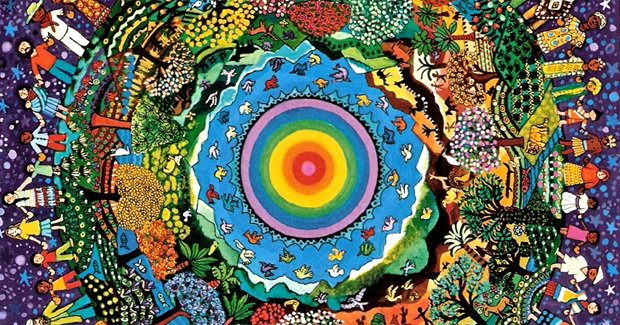
http://themindunleashed.org/2015/07/the-top-100-documentaries-we-can-use-to-change-the-world.html
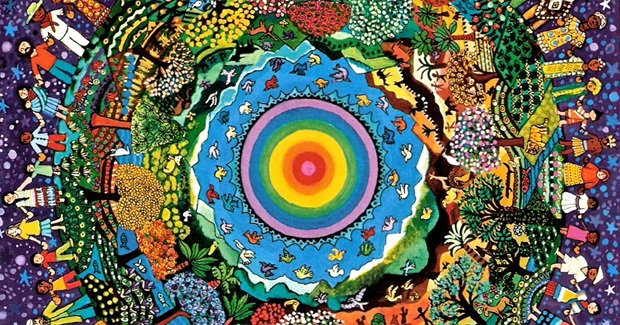
http://themindunleashed.org/2015/07/the-top-100-documentaries-we-can-use-to-change-the-world.html
Friday, 10 July 2015
Bhaskar Save, the Gandhi of Natural Farming
Bhaskar Save, acclaimed ‘Gandhi of Natural Farming’, turned 92 on 27 January 2014, having inspired and mentored 3 generations of organic farmers. Masanobu Fukuoka, the legendary Japanese natural farmer, visited Save’s farm in 1996, and described it as “the best in the world”, ahead of his own farm. In 2010, the International Federation of Organic Agriculture Movements (IFOAM) honoured Save with the ‘One World Award for Lifetime Achievement’.
Indeed, Save’s farm is a veritable food forest; a net supplier of water, energy and fertility to the local eco-system, instead of a net consumer. His way of farming and teachings are rooted in a deep understanding of the symbiotic relationships in nature, which he is ever happy to explain in simple, down-to-earth idioms to anyone interested.
more here:
http://permaculturenews.org/2014/02/26/bhaskar-save-gandhi-natural-farming/
Indeed, Save’s farm is a veritable food forest; a net supplier of water, energy and fertility to the local eco-system, instead of a net consumer. His way of farming and teachings are rooted in a deep understanding of the symbiotic relationships in nature, which he is ever happy to explain in simple, down-to-earth idioms to anyone interested.
more here:
http://permaculturenews.org/2014/02/26/bhaskar-save-gandhi-natural-farming/
Friday, 26 June 2015
Tour and visit of Djanbung Gardens in Nimbin
I had the chance last week to visit Djanbung Gardens in Nimbin together with Kate. Djanbung gardens is one of Australia 's leading Permaculture centre established in 1994 by Robyn Francis .Its a living landscape of sustainability in practice. Djanbung means platypus in the local Wyabul dialect. The name was given by Bundjalung elder ´Uncle´ Eric Walker.

 A BRIEF HISTORY
1993 – land was acquired, major earthworks for dams & swales, 3 railway carriages moved on site, renovated & essential services installed. First trees planted
1994 – moved into railway carriages, started gardens, first courses conducted
1995 – received Rivercare 2000Award for Composting toilet & greywater system
1996 – began construction of main education centre building
1997 – hosted Australasian Permaculture Convergence
1998 – Main building officially opened
2000-2002 – hosted National Permaculture Gatherings
2003 – launched National Accredited Permaculture Training
2005 – Commenced APT delivery Cert III and Cert IV at Djanbung Gardens and established Bioregional Campus
since then the gardens have continued to grow, and grow, and grow….
 Robyn Francis has been developing and delivering permaculture training throughout Australia and internationally since 1984, and is regarded as one of permaculture’s leading and most experienced educators and practitioners. She has taught hundreds of courses including the classic PDC, advanced and specialist courses for professional development, as well as fulltime Accredited Permaculture Training (APT) Certificate III, IV and Diploma. Many highly respected permaculture teachers and presenters have undertaken training with Robyn Francis including Rosemary Morrow, Geoff Lawton, Costa Georgiadis, Morag Gambol, Darren Dougherty, John Champagne and Steve Cran.
Robyn Francis is the founder and principal of Permaculture College Australia, developing curricula and programs, and senior trainer-assessor for the APT Certificate IV and Diploma program at Djanbung Gardens. Her annual schedule includes limited periods for travelling to teach intensive courses elsewhere in Australia and overseas.
Overseas work has involved teaching PDCs, advanced courses, teacher training, professional development and consultation in Bali, Indonesia, Malaysia, Taiwan, New Zealand, USA, Cuba, Germany and France, many of which have involved working with translators.
It was an honor for me to meet Robyn Francis,her daughter and other permaculture practitioners involved at Djanbung Gardens

 Student Accomodations
It felt the whole place is very well geared towards creating a nice learning environment for students and Robyn herself is just such a lovely,inspiring and knowledgeable person that has dedicated many years of her life towards Permaculture research and practical action.

Here are short infos of some of he Key areas of Djanbung Gardens as shown to us by Robyn Francis daughter during our visit. These key areas are described very nicely in the map handout for self guided tours and I have complied here some of them :
Education & Resource Centre: This building has been designed by Robyn Francis and features passive solar house design. Natural building techniques like earthbricks,natural renders and packed-sawdust-sand panels. The surrounding edible landscape supports the passive solar design with deciduous trees to the north and windbreaks to the south-west.
Greywater Wetland Treatment System: This Rivercare 2000 Award winning system treats greywater from the railway-carriages kitchen sink,shower,handbasin and laundray tub plus excess urine from the composting toilets.
Blackwater Reedbed Treatment & Flow Forms: Treats waste water from the main building canteen kitchen and flushing toilet. All waste flows into septic tank for solids to settle out and waste water gravity feeds trough the reedbed system for purification. The holding pond has flow forms for aeration treatment and oxygenation as the final treatment.
Djanbung Gardens Main Dam: The main dam with a holding capacity of 1,8 megalitres is Djanbung “drought insurance ¨ .The pond is also a natural aquaculture system stocked with native fish,attracts a variety of wild aquatic animals and water birds and provides a natural swimming pool in summer.
Top dam for gravity irrigation: Constructed at the highest point of the property,this dam gravity feeds the watering system for the gardens and livestock.


Temperate Orchard and Ducks: This orchard maximises the winter chill and frost factor of the valley floor.A flock of ducks are rotated to provide natural fertilisers for the fruit trees,and control weeds and pests.Over 18 citrus varieties are inter-planted with temperate fruits including pomegranate,fig,olive,japanese plum,quince,pecan,low chill peach and native shrubs for pest predators.
Tropical Food Forest: A frost-free microclimate has been created for subtropical and tropical fruits.Under the tree legume canopy are layers of productive plants: Jakfruit, Starfruit, Grumichama and local rainforest bushfoods. Understory plants include Coffee, Galangal, Tumeric and Cardamon.
Poultry & Pig System: Two poultry systems flank the main path to the garden and composting bays.The main chicken system includes a strawyard for processing garden mulch and a forage forest if fruit trees and bamboo windbreak where garden weeds and food scraps are fed to the chickens.Breeds include old heritage rare breeds.Adjoining the poultry is the permanent pig pen housing for Polly,the main poo producer for compost.The pigs are taken for regular forage walks in the orchard and there are also pig tractor gardens where main staple crops are planted after the pigs worked the soil.
The mulch meadow: The main mulch meadow is a valuable source of mulch and provides an area for occasional animal free-ranging. It is also a valuable space for recreation and events.
Overall I really enjoyed my time at Djanbung Gardens and felt inspired by the place,its people and the lovely social environment. Hope to be back in the future.......
more about Djanbung Gardens and Robyn Francis here:
http://permaculture.com.au/djanbung-gardens-overview/
http://www.robynfrancis.com/category/permaculture/djanbung-gardens-permaculture/
http://www.robynfrancis.com/category/permaculture/training/


1993 – land was acquired, major earthworks for dams & swales, 3 railway carriages moved on site, renovated & essential services installed. First trees planted
1994 – moved into railway carriages, started gardens, first courses conducted
1995 – received Rivercare 2000Award for Composting toilet & greywater system
1996 – began construction of main education centre building
1997 – hosted Australasian Permaculture Convergence
1998 – Main building officially opened
2000-2002 – hosted National Permaculture Gatherings
2003 – launched National Accredited Permaculture Training
2005 – Commenced APT delivery Cert III and Cert IV at Djanbung Gardens and established Bioregional Campus
since then the gardens have continued to grow, and grow, and grow….

Robyn Francis the founder of Djanbung Gardens,she has completed her PDC in 1983 and is one of the Permaculture pioneers of Australia.Robyn Francis is an inspiring and skilled educator, passionate about empowering people to solve problems in a practical and creative way, regenerate their environments, build resilient communities and create abundance while caring for the earth. Based on the earthcare ethics and ecological principles permaculture can be readily applied and adapted to specific cultures and climates.
Robyn Francis is the founder and principal of Permaculture College Australia, developing curricula and programs, and senior trainer-assessor for the APT Certificate IV and Diploma program at Djanbung Gardens. Her annual schedule includes limited periods for travelling to teach intensive courses elsewhere in Australia and overseas.
Overseas work has involved teaching PDCs, advanced courses, teacher training, professional development and consultation in Bali, Indonesia, Malaysia, Taiwan, New Zealand, USA, Cuba, Germany and France, many of which have involved working with translators.
It was an honor for me to meet Robyn Francis,her daughter and other permaculture practitioners involved at Djanbung Gardens

Djanbung Gardens – from cowpasture to permaculture paradise

It felt the whole place is very well geared towards creating a nice learning environment for students and Robyn herself is just such a lovely,inspiring and knowledgeable person that has dedicated many years of her life towards Permaculture research and practical action.

Here are short infos of some of he Key areas of Djanbung Gardens as shown to us by Robyn Francis daughter during our visit. These key areas are described very nicely in the map handout for self guided tours and I have complied here some of them :
Education & Resource Centre: This building has been designed by Robyn Francis and features passive solar house design. Natural building techniques like earthbricks,natural renders and packed-sawdust-sand panels. The surrounding edible landscape supports the passive solar design with deciduous trees to the north and windbreaks to the south-west.
Greywater Wetland Treatment System: This Rivercare 2000 Award winning system treats greywater from the railway-carriages kitchen sink,shower,handbasin and laundray tub plus excess urine from the composting toilets.
Blackwater Reedbed Treatment & Flow Forms: Treats waste water from the main building canteen kitchen and flushing toilet. All waste flows into septic tank for solids to settle out and waste water gravity feeds trough the reedbed system for purification. The holding pond has flow forms for aeration treatment and oxygenation as the final treatment.
Djanbung Gardens Main Dam: The main dam with a holding capacity of 1,8 megalitres is Djanbung “drought insurance ¨ .The pond is also a natural aquaculture system stocked with native fish,attracts a variety of wild aquatic animals and water birds and provides a natural swimming pool in summer.
Top dam for gravity irrigation: Constructed at the highest point of the property,this dam gravity feeds the watering system for the gardens and livestock.


Temperate Orchard and Ducks: This orchard maximises the winter chill and frost factor of the valley floor.A flock of ducks are rotated to provide natural fertilisers for the fruit trees,and control weeds and pests.Over 18 citrus varieties are inter-planted with temperate fruits including pomegranate,fig,olive,japanese plum,quince,pecan,low chill peach and native shrubs for pest predators.
Tropical Food Forest: A frost-free microclimate has been created for subtropical and tropical fruits.Under the tree legume canopy are layers of productive plants: Jakfruit, Starfruit, Grumichama and local rainforest bushfoods. Understory plants include Coffee, Galangal, Tumeric and Cardamon.
Poultry & Pig System: Two poultry systems flank the main path to the garden and composting bays.The main chicken system includes a strawyard for processing garden mulch and a forage forest if fruit trees and bamboo windbreak where garden weeds and food scraps are fed to the chickens.Breeds include old heritage rare breeds.Adjoining the poultry is the permanent pig pen housing for Polly,the main poo producer for compost.The pigs are taken for regular forage walks in the orchard and there are also pig tractor gardens where main staple crops are planted after the pigs worked the soil.
The mulch meadow: The main mulch meadow is a valuable source of mulch and provides an area for occasional animal free-ranging. It is also a valuable space for recreation and events.
Overall I really enjoyed my time at Djanbung Gardens and felt inspired by the place,its people and the lovely social environment. Hope to be back in the future.......
more about Djanbung Gardens and Robyn Francis here:
http://permaculture.com.au/djanbung-gardens-overview/
http://www.robynfrancis.com/category/permaculture/djanbung-gardens-permaculture/
http://www.robynfrancis.com/category/permaculture/training/
Core Model Poster by Gaia Craft
“The patterns and forms of a tree are found in many natural and
evolved structures; an explosion, event, erosion sequence, idea,
germination, or rupture at an edge or interface of two systems or media
(here, earth and atmophsere) may generate the tree form in time and
space. The tree form may be used as a general teaching model for
geography, ecology, and evolution; it portrays the movement of energy
and particles in time and space.”
– Bill Mollison
Inspired by an exercise from Permaculture Elder Larry Santoyo, this collaborative project between Delvin Solkinson and Martin Bridge grew out of their work together at the CoSM Visionary Permaculture Design Certificate Course. If you were to redesign society from the ground up, what elements would you need to have in place?
Consider both visible and invisible elements of that system. Integrating the design principle “Make it beautiful” and the spirit of CoSM’s effort to provide the most creative and inspiring model in all their efforts, Martin Bridge developed this learning tool over a number of versions.
This art is being offered freely to any designers, teachers and student who wish to utilize it in their work. This is a gift to the Permaculture Movement to support the evolution of permaculture education worldwide. Visit http://thebridgebrothers.com/martinclarkbridge/ www.facebook.com/martinbridgeart to see more of Martin’s work
download free from: http://gaiacraft.com/core-model-poster/

– Bill Mollison
Inspired by an exercise from Permaculture Elder Larry Santoyo, this collaborative project between Delvin Solkinson and Martin Bridge grew out of their work together at the CoSM Visionary Permaculture Design Certificate Course. If you were to redesign society from the ground up, what elements would you need to have in place?
Consider both visible and invisible elements of that system. Integrating the design principle “Make it beautiful” and the spirit of CoSM’s effort to provide the most creative and inspiring model in all their efforts, Martin Bridge developed this learning tool over a number of versions.
This art is being offered freely to any designers, teachers and student who wish to utilize it in their work. This is a gift to the Permaculture Movement to support the evolution of permaculture education worldwide. Visit http://thebridgebrothers.com/martinclarkbridge/ www.facebook.com/martinbridgeart to see more of Martin’s work
download free from: http://gaiacraft.com/core-model-poster/

Tuesday, 16 June 2015
AUSSIE STREET TALK AND RETROFIT MULLUMBIMBY WORKSHOP with David Holmgren
Last weekend I was fortunate enough to have the chance to participate in the Retrofit Mullumbimby Workshop with David Holmgren the co-originator of the Permaculture Design Science and also listen to his Aussie Street talk the day before in the Mullumbimby Civic Hall.

David Homlgren's Aussie Street talk at the Civiv Hall in Mullumbimby
Davids Aussie Street talk deals with the Energy Descent Future ahead of us and asks the question of how will the typical suburban australien household deal with an energy descent future when less cheap oil will be available and climate change effects us. In a country were there are in total 8 Mio. empty bedrooms in massive houses. This type of questions were raised :
What will we eat? What will it cost?
What will we do with all the open spaces in a typical Australien suburban
environment?
What type of economic system will be present?
What will we do with coastal real estate that has lost its value as climate change
is in full effect ?
Can Permaculture renew suburbs after the property bubble collapses?
What type of opportunities are going to be there?
Many examples and possible solutions have been discussed reaching from a renewable solar-powered agriculture systems,Community Supported Agriculture , non monetary economics, re-localization , community networks and collaboration.
A few actions to kick-start the re-localization process have been mentioned:
Get producing & support local producers
Review needs & reduce consumption
Share your place! Get in a boarder!
Car pool
Get out of debt
Network for inspiration & information
During the talk several times for me the importance of collaboration and shift in personal behaviors have come up. The utmost importance of social connection and re-localization with a focus on resilience and productivity using Permaculture as a model for direct change.
A very clear and inspiring statement from one of Davids publications always keeps coming back to me:
…...the ways we observe & fail to see,the ways we think & fail to grasp,the ways we speak & fail to listen are all more important to the long term achievement of a sustainable society then any particular information about appropriate technology,plant and animal species or land management. While
information & experience with these elements in the Permaculture toolkit are necessary they do not of themselves lead to sustainable systems.
The focus of collaboration,co-operation and personal transformation becomes very clear after David mentioned to the group:
How many competent backyard gardeners have we produced in the last 30
years of Permaculture? How realistic is the future of all of us growing their own
food in a Permaculture way on their own land?
This question come to my mind:
Do we all need to collaborate together and set up local food systems which are ethical and environmental sustainable?
The next day we meet at 9am at the Community Gardens of Mullumbimby an
very inspiring place and project.
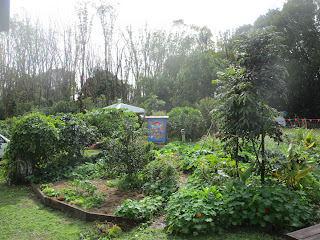 A part of Community Gardens Mullumbimby

The workshop started with a short introduction of Davids 30 year long work at his own place Melliodora in Victoria. Its was really really inspiring to here directly from him and his partner Su about the successes and challenges of 30 years Permaculture Design,Education and Living.
 David and Su sharing details about Melliodora
David Holmgren has been recommending for 30 years: to engage in a shift away from being a dependent consumer, and toward being a responsible self-reliant producer for your household and community, and to shift a significant portion of assets out of the mainstream economy and move them into building household and community resilience.(from Integral Permaculture.wordpress.com)
Melliodora is one of the only places with an in depth study and documentation of the effects and benefits of a Permaculture system operating for 30 years and is definitely one of the best managed and established Permaculture sites in the world . David documented very well all the yields , inputs and outputs of his specific site. At Melliodora David and Su have worked within the following areas which are of great importance for resilience:
History and Connection to place
Constraints of climate an wildlife
Surveying the opportunities
Earthworks
Ecological building materials
Passive solar design – cooling,heating,food storage
Waterharvesting
Nutrient cycling & soil building
Garden agriculture – food security,health , conservation
Tree crops – food,fodder and mulch
Working with animals – yield & ecological services
Harvesting wild abundance – mushrooms,bees,berries
Local and seasonal food culture
Low energy food preserving
Immersing children in holistic living
A focus on shared food
Renewable energy from low to high tech
Creative re use and manufacture
Learning from novel ecosystems
Food Forests for the future
Community supported agriculture
Volunteering and exchange
Publishing and documentation
Sharing the space and connecting to the world
Communicating the message
Measuring & monitoring your project
The following two question were raised during David presentation:
Can we measure resilience?
Does resilience also reduce environmental impact?
Together we were also looking at resilience indicators before we move on to the presentation of the Energy Descent Action Plan (EDAP) for a Brown Tech future. The theme was planning positively for a world of less while we hope for the best but assume the worst. The Energy Descent Scenarios were clearly outline to us:


It was made clear to us that severe climate change and rapid collapse of our resource base could easily trigger a major crisis which most of us are not prepared for. We realized that a crisis also creates opportunities and breaks open a door for new possibilities. The knowledge of this possibilities that might come up connects us to the importance of preparedness to make best use of new opportunities. The valuable skills of practical self-reliance,collaboration and Permaculture Design will help us to make direct change in the following areas:
Land and nature stewardship
Buildings and infrastructure
Tools and technology
Education and culture
Health and spiritual well being
Finance and economics
Land tenure and community governance
We also brainstormed together in groups useful strategies for specific energy descent scenarios.

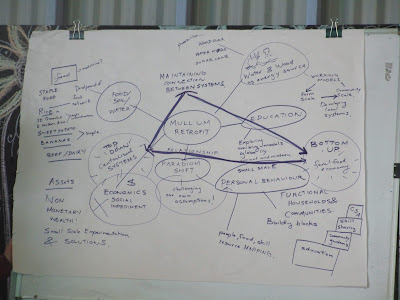
Following the brainstorm,we discussed all together strategies to retrofit Mullumbimby and their aim of 100% sustainability in the near future.
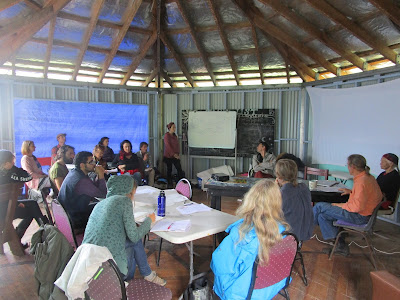
A quick mindmap with input from Davidś years of experience and knowledge was created and will be a useful resource for the future work of the Mullumbimby action groups.
Afterwards we had a good lunch of local organic home made food before the action groups of Mullumbimby meet for their 2nd yearly meeting to share,connect and exchange. For me it was impressive to see how forward thinking and active the local community in Mullumbimby is and it gave me a lot of hope and inspiration for the future ahead.

Thanks so much to David for his inspiring talks and wealth of knowledge,to all the activists involved in direct action in the Mullumbimby area and the organizers from Free Farm for their great work and dedication.It was really a great start into the weekend !

David Homlgren's Aussie Street talk at the Civiv Hall in Mullumbimby
Davids Aussie Street talk deals with the Energy Descent Future ahead of us and asks the question of how will the typical suburban australien household deal with an energy descent future when less cheap oil will be available and climate change effects us. In a country were there are in total 8 Mio. empty bedrooms in massive houses. This type of questions were raised :
What will we eat? What will it cost?
What will we do with all the open spaces in a typical Australien suburban
environment?
What type of economic system will be present?
What will we do with coastal real estate that has lost its value as climate change
is in full effect ?
Can Permaculture renew suburbs after the property bubble collapses?
What type of opportunities are going to be there?
Many examples and possible solutions have been discussed reaching from a renewable solar-powered agriculture systems,Community Supported Agriculture , non monetary economics, re-localization , community networks and collaboration.
A few actions to kick-start the re-localization process have been mentioned:
Get producing & support local producers
Review needs & reduce consumption
Share your place! Get in a boarder!
Car pool
Get out of debt
Network for inspiration & information
During the talk several times for me the importance of collaboration and shift in personal behaviors have come up. The utmost importance of social connection and re-localization with a focus on resilience and productivity using Permaculture as a model for direct change.
A very clear and inspiring statement from one of Davids publications always keeps coming back to me:
…...the ways we observe & fail to see,the ways we think & fail to grasp,the ways we speak & fail to listen are all more important to the long term achievement of a sustainable society then any particular information about appropriate technology,plant and animal species or land management. While
information & experience with these elements in the Permaculture toolkit are necessary they do not of themselves lead to sustainable systems.
The focus of collaboration,co-operation and personal transformation becomes very clear after David mentioned to the group:
How many competent backyard gardeners have we produced in the last 30
years of Permaculture? How realistic is the future of all of us growing their own
food in a Permaculture way on their own land?
This question come to my mind:
Do we all need to collaborate together and set up local food systems which are ethical and environmental sustainable?
The next day we meet at 9am at the Community Gardens of Mullumbimby an
very inspiring place and project.


The workshop started with a short introduction of Davids 30 year long work at his own place Melliodora in Victoria. Its was really really inspiring to here directly from him and his partner Su about the successes and challenges of 30 years Permaculture Design,Education and Living.

David Holmgren has been recommending for 30 years: to engage in a shift away from being a dependent consumer, and toward being a responsible self-reliant producer for your household and community, and to shift a significant portion of assets out of the mainstream economy and move them into building household and community resilience.(from Integral Permaculture.wordpress.com)
Melliodora is one of the only places with an in depth study and documentation of the effects and benefits of a Permaculture system operating for 30 years and is definitely one of the best managed and established Permaculture sites in the world . David documented very well all the yields , inputs and outputs of his specific site. At Melliodora David and Su have worked within the following areas which are of great importance for resilience:
History and Connection to place
Constraints of climate an wildlife
Surveying the opportunities
Earthworks
Ecological building materials
Passive solar design – cooling,heating,food storage
Waterharvesting
Nutrient cycling & soil building
Garden agriculture – food security,health , conservation
Tree crops – food,fodder and mulch
Working with animals – yield & ecological services
Harvesting wild abundance – mushrooms,bees,berries
Local and seasonal food culture
Low energy food preserving
Immersing children in holistic living
A focus on shared food
Renewable energy from low to high tech
Creative re use and manufacture
Learning from novel ecosystems
Food Forests for the future
Community supported agriculture
Volunteering and exchange
Publishing and documentation
Sharing the space and connecting to the world
Communicating the message
Measuring & monitoring your project
The following two question were raised during David presentation:
Can we measure resilience?
Does resilience also reduce environmental impact?
Together we were also looking at resilience indicators before we move on to the presentation of the Energy Descent Action Plan (EDAP) for a Brown Tech future. The theme was planning positively for a world of less while we hope for the best but assume the worst. The Energy Descent Scenarios were clearly outline to us:


It was made clear to us that severe climate change and rapid collapse of our resource base could easily trigger a major crisis which most of us are not prepared for. We realized that a crisis also creates opportunities and breaks open a door for new possibilities. The knowledge of this possibilities that might come up connects us to the importance of preparedness to make best use of new opportunities. The valuable skills of practical self-reliance,collaboration and Permaculture Design will help us to make direct change in the following areas:
Land and nature stewardship
Buildings and infrastructure
Tools and technology
Education and culture
Health and spiritual well being
Finance and economics
Land tenure and community governance
We also brainstormed together in groups useful strategies for specific energy descent scenarios.
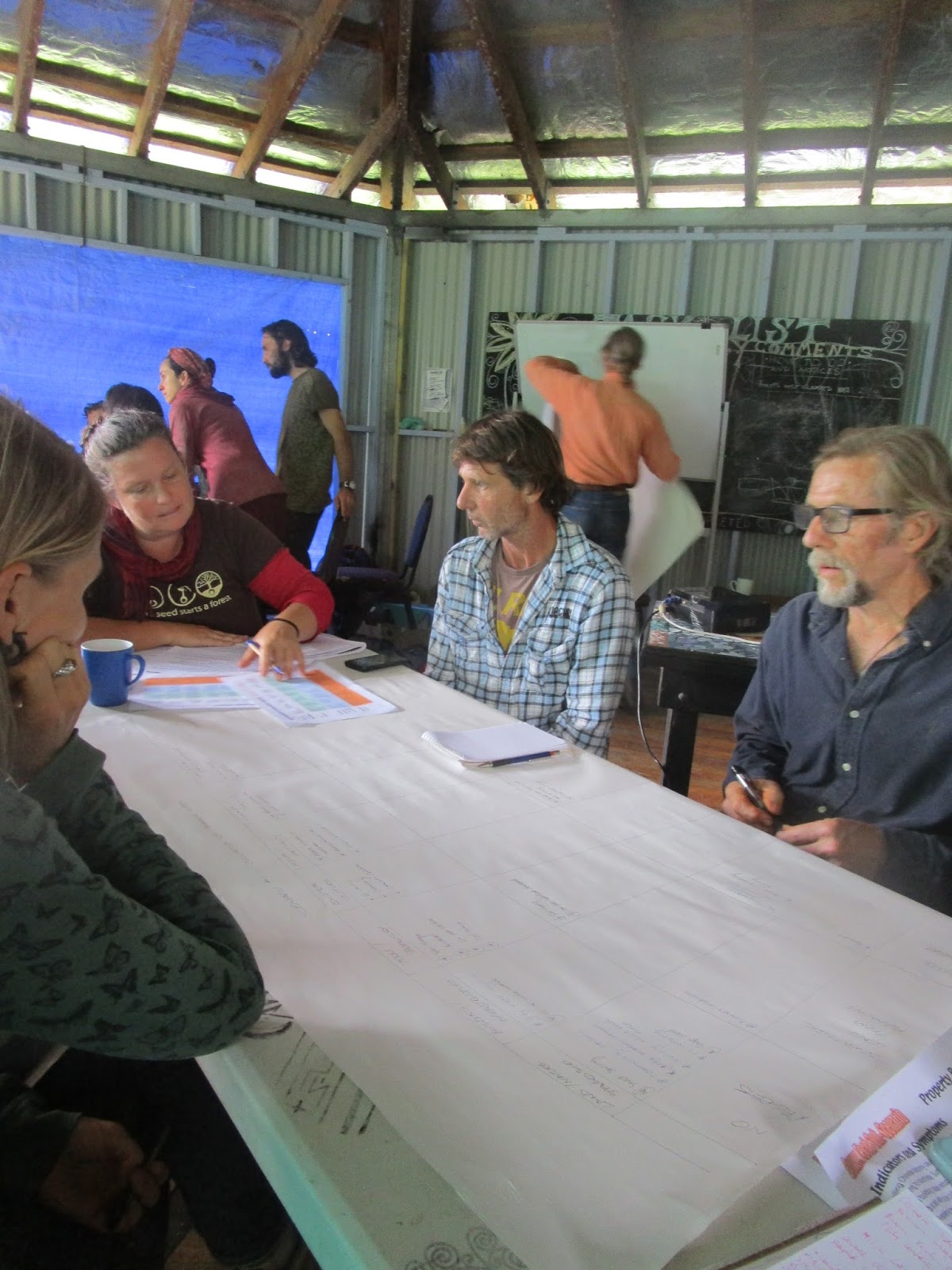
Following the brainstorm,we discussed all together strategies to retrofit Mullumbimby and their aim of 100% sustainability in the near future.

A quick mindmap with input from Davidś years of experience and knowledge was created and will be a useful resource for the future work of the Mullumbimby action groups.

Afterwards we had a good lunch of local organic home made food before the action groups of Mullumbimby meet for their 2nd yearly meeting to share,connect and exchange. For me it was impressive to see how forward thinking and active the local community in Mullumbimby is and it gave me a lot of hope and inspiration for the future ahead.

Thanks so much to David for his inspiring talks and wealth of knowledge,to all the activists involved in direct action in the Mullumbimby area and the organizers from Free Farm for their great work and dedication.It was really a great start into the weekend !
Friday, 8 May 2015
Farmer Managed Natural Regeneration
Farmer Managed Natural Regeneration
Farmer Managed Natural Regeneration (FMNR) is a low-cost land restoration technique used to combat poverty and hunger amongst poor subsistence farmers by increasing food and timber production and resilience to climate extremes.
In practice, FMNR involves the systematic regrowth and management of trees and shrubs from felled tree stumps, sprouting root systems or seeds. The regrown trees and shrubs – integrated into crops and grazing pastures – help restore soil structure and fertility, inhibit erosion and soil moisture evaporation, rehabilitate springs and the water table, and increase biodiversity. Some tree species also impart nutrients such as nitrogen into the soil.
As a result, FMNR can double crop yields, provide building timber and firewood, fodder and shade for livestock, wild foods for nutrition and medication, and increased incomes and living standards for farming families and their communities.
see more information here:
International Permaculture Day - Weekend Project visits - Crystal Waters & Bellbunya
I am in Australia at the moment and we had the chance to visit two exiting Projects last weekend which also was the International Permaculture Day (last Sunday).We decided to celebrate this event with some Permaculture Project visits in the local area and also dedicate some of our practical attention to the soil.But read more here:
Our trip started on Saturday morning with a visit to the famous Crystal Waters Permaculture Village which had a market day and we also got the chance to have a guided tour by Robin Clayfield,one of the Permaculture pioneers. Robin Clayfield has spent the past 30 years working, playing and interacting in groups in various capacities.Since 1990 she has been facilitating and creating one and two week intensive residential courses, Training Teachers, Guiding Women’s Weekends, Designing and Leading Empowerment and Visioning sessions (for Community Groups, Businesses and Individuals), Lobbying Governments & Councils, Chairing Meetings, Presenting at Conferences and Festivals, as well as Living, Working and Sharing with others in Community – all in a spirit of empowerment, creativity, joy and holistic growth and learning(taken from Crystal Water Website).
 The Crystal Waters Entry Sign

 Bamboo Construction
 Creative Mosaic Floor and Bench

Where’s the Permaculture in Crystal Waters?
 The crystal waters village area
 Kangaroos hanging out
 Private Garden and Green Roof Housing

Integral to the Centre is the Bellbunya Sustainable Community, established to explore ways to create a re-localised and sustainable future. Our “4-bottomline” approach includes: (1) personal and spiritual growth, (2) social sustainability, (3) economic sustainability, and (4) environmental sustainability. We practice permaculture, organic growing and bushland regeneration. We employ a broad range of group process skills and techniques for group facilitation, collaborative decision making, team building, conflict resolution and project management. We have developed various processes and structures to enable us to function effectively and to continue to learn and grow – both as a community and as individuals. We are growing sustainable enterprises that develop the healthy interplay of relationships with our environment and each other.


 Adrien turning the 18 day compost

Our trip started on Saturday morning with a visit to the famous Crystal Waters Permaculture Village which had a market day and we also got the chance to have a guided tour by Robin Clayfield,one of the Permaculture pioneers. Robin Clayfield has spent the past 30 years working, playing and interacting in groups in various capacities.Since 1990 she has been facilitating and creating one and two week intensive residential courses, Training Teachers, Guiding Women’s Weekends, Designing and Leading Empowerment and Visioning sessions (for Community Groups, Businesses and Individuals), Lobbying Governments & Councils, Chairing Meetings, Presenting at Conferences and Festivals, as well as Living, Working and Sharing with others in Community – all in a spirit of empowerment, creativity, joy and holistic growth and learning(taken from Crystal Water Website).
Crystal Waters is an environmentally and socially responsible rural subdivision, designed using permaculture principles. With a community of over 200 people living in the village, it is continually evolving, physically and socially.
The property covers 650 acres, of which 20% is made up of 83 residential and 2 lots for the Crystal Waters Community Co-operative (Co-Op) which provides facilities and services for the social and economic aspirations of the community. The remaining 80% is the best land and is owned in common. It can be licensed by residents for agriculture, forestry, recreation and habitat projects
It was really exiting and amazing to meet Robin,some of the crystal water villagers living there and to get some first had information about the Design and Projects of Crystal Waters from Robin.

The Market Area
We had also got the chance to meet Max Lindegger and see his garden.Max is one of the Permaculture Pioneers,he was invited by Bill Mollison to participate at the first Permaculture Course in 1979 and he also took part in the second course the year after. Since then he has been teaching Permaculture courses from the UK to the US, from Denmark to Macau and from Argentina to New Zealand and has been consulting on the subject in over 60 countries.


Crystal Waters Village Objectives.
In the early design stages, six basic objectives were agreed upon
- Clean air, water and soil (thus food)
- Freedom of spiritual belief
- To work towards a guarantee of meaningful activity for all
- To create a place for healthy play and safe recreation
- Active social interaction
- Healthy shelter/accommodation
These have mostly been achieved and maintained.

Sustainable Housing and Architecture
Where’s the Permaculture in Crystal Waters?
Permaculture is about design, and the efficient and productive use of land while taking care of the earth. Permaculture looks at the incredible diversity of plant and wildlife, the intricacies of eco-systems with their natural checks and balances and uses this knowledge to create a sustainable way of life.
Examples of principles used in the design are:
- The balance of the hydrology was maintained, ensuring that the quality and quantity of the water downstream has not been negatively affected by Crystal Waters’ development.
- 17 dams were created and are multi-purpose –
- increasing the ‘edge’,
- providing access for traffic from ridge to ridge,
- opportunities for aquaculture, climate moderation, recreation, beauty and habitat.
- They provide a flood mitigation strategy; as they absorb runoff and the overflow is directed into the Mary River and Kilcoy Creek via specially placed swales.
- They are also a source of emergency water.
- Re-use and recycle are two catchcrys of Permaculture. Evidence of this philosophy can be seen all around Crystal Waters, in the overall design and in individual lots. There has been a consciousness change towards human waste. It is not seen as someone else’s problem but as a resource.
- A long term sustainable approach is taken, particularly with regard to forestry. Trees have been planted with the intention that they provide habitat and moderate environmental extremes, as well as various timber end uses.
- Buildings make extensive use of renewable materials such as earth and wood, with particular emphasis on solar passive design.
- The multiple usage of land. Crystal Waters can now accommodate up to 300 people, 83 home gardens. The best land has been set aside for agriculture, the steeper areas for forestry, recreation and natural habitat.
- Zoning can be seen on individual lots, but also in the overall design.
- The public face of the village is placed in Zone 1, and all are Welcome here. This is The Village Green, The Deck & Kitchen, The Bakery, Gaia Healing Centre and other Businesses are also part of this zone.
- Zone 2 incorporates the Visitor’s Camping Area (VCA) and the Community House/Training Centre, where visitors come for short term stays and to take part in courses.
- Zone 3 contains the residential, agricultural and habitat areas, and visitors need to be invited here


Robin Clayfield, Kate and me
It was an amazing and exiting experience and i am grateful that i got the chance to see the world famous and pioneering permaculture village Crystal Waters,meet its people and environment.
Afterwards on sunday we visited my friend Daniel,which i met in India at a PDC that we organized with Govinda Sharma from Nepal.Daniel is at the moment Farm manager at Bellbunya another interesting project here in the Sunshine Coast area.
Bellbunya Sustainable Community and Eco-Retreat Centre:
Bellbunya is a demonstration centre for sustaining living on the Sunshine Coast Hinterland in Queensland Australia.
Bellbunya is owned by an environmental charity and set up as an intentional community on 40 acres. We have organic food gardens, wildlife corridors, a creek and lagoon, a conference hall and restaurant and accommodation for up to 16 guests. The Centre is run on 100% renewable energy through our 7.2kva solar panel system and by buying wind farm energy.
Integral to the Centre is the Bellbunya Sustainable Community, established to explore ways to create a re-localised and sustainable future. Our “4-bottomline” approach includes: (1) personal and spiritual growth, (2) social sustainability, (3) economic sustainability, and (4) environmental sustainability. We practice permaculture, organic growing and bushland regeneration. We employ a broad range of group process skills and techniques for group facilitation, collaborative decision making, team building, conflict resolution and project management. We have developed various processes and structures to enable us to function effectively and to continue to learn and grow – both as a community and as individuals. We are growing sustainable enterprises that develop the healthy interplay of relationships with our environment and each other.
Here are some Pictures of the Bellbunya Gardens and surrounding environment:


It was a real pleasure to meet Daniel again and get a informative and inspiring tour of the Bellbunya Project.
Last but not least we also turned the 18 day Compost that has been made at the last PDC Course here and connected ourselves to the importance of good soil!
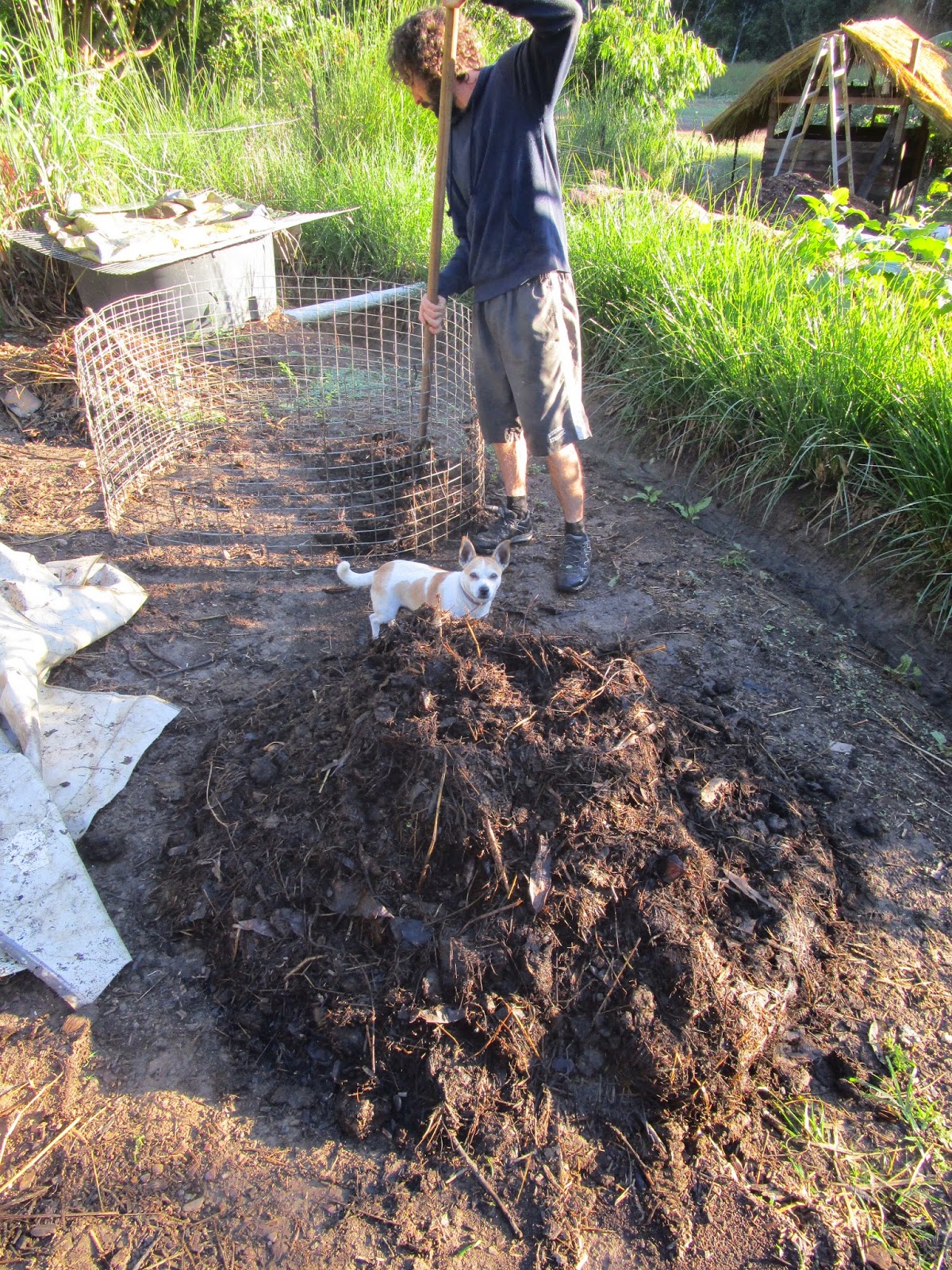

The 18 Day Compost in its final Stages
Overall i really enjoyed this active and inspiring weekend!
Subscribe to:
Posts (Atom)